

A higher building share, more depreciation.
Only the building is depreciable — not the land. An appraisal of the purchase price allocation separates both values reliably and usually creates a higher depreciation base than the tax office’s flat-rate estimate.
Not depreciating earlier — depreciating more.
For tax purposes, land and building are two separate assets: land does not wear out, only the building is depreciated. The purchase price allocation does not move the time axis. It increases the amount that may be depreciated at all: the building share is the assessment base of the depreciation. If it turns out reliably higher than the tax office’s flat-rate estimate, every single annual amount rises — across the entire useful life. That is a real gain in depreciation volume.
How high this share turns out is decided by the valuation method. By default the flat-rate BMF-Arbeitshilfe is used — Gutachtenwelt checks whether the assessment base of your depreciation has been set too low.
Depreciation €6,700 / year
Depreciation €8,100 / year
At a 42 % marginal tax rate, roughly €588 in tax per year — year after year.
The standard route is rarely the best one.
The purchase price allocation is usually handled via the BMF-Arbeitshilfe or the comparative value method — convenient, but flat-rate. Both assume one uniform logic for every property, much like the flat 50 years for the remaining useful life, and for investment properties they usually yield the lowest building share, meaning the smallest depreciation volume.
For rented properties an income-oriented approach is more appropriate — and legally permissible, provided the choice of method is justified with reference to the specific property. That is exactly what Gutachtenwelt delivers: we apply the fitting method to your investment property and justify it in a legally sound way — for a higher, soundly derived building share.
Comparative value
Derives the value from actual sales of comparable properties. Requires a reliable data basis — where it exists, the method is meaningful and is still rarely used.
Income value
standard routeCalculates via the achievable rents and underlies the worksheet. Appropriate with clear income conditions — but as a flat-rate automatism frequently to your disadvantage.
Asset value
Starts from the construction costs. The first choice when comparative or income data is missing — for example with owner-occupied or particularly individual properties.
Reverse income value
Often better than standardTurns the calculation around: from the purchase price paid and the actual income, the land value is derived and the building share determined as the remainder. Not contained in the BMF-Arbeitshilfe, but permissible in an appraisal — and usually the most fitting variant for rented properties.
Whether the method holds can be checked in advance.
We calculate the purchase price allocation using the reverse income value method — the route that, for rented properties, usually produces the most defensible building share. Whether it does so for your property too depends on a few figures: rent, standard land value, year of construction, area. Those are exactly what we ask for in the form. On that basis an expert certified per DIN EN ISO/IEC 17024 estimates what is realistically achievable. It is an assessment based on your details — not a review of documents and not a valuation of the property. Only then do you decide.
If your property yields no better result than the tax office’s standard route, we say so openly — then you save yourself the appraisal.
Free initial assessment- Whether the method works for your propertyAssessed on the basis of the details you provide about the property.
- Which building share is achievableThe justifiable allocation compared to the tax office’s standard route.
- What that means for taxThe additional depreciation per year, estimated from your details.
- Fixed price and durationA binding price and time frame before you place the order — non-binding and free of charge.
First we check, then you buy
A few details are enough — before placing the order you see what is achievable.
- a few minutes
Provide details about the property
You fill in our form and submit it. The details run digitally via a secure portal.
- applicable instead of flat-rate
Reverse income value method reviewed
We check whether the reverse income value method actually leads to a better result than the standard route of the BMF-Arbeitshilfe.
- free & non-binding
Initial assessment with a target corridor
You learn in advance which building share is realistically achievable for your property — as a reliable corridor, not as a promise. Only then do you decide.
- audit-proof
Place the order and receive the appraisal
After the order is placed, an expert certified per DIN EN ISO/IEC 17024 validates the calculation and signs the appraisal.
One fixed price — clear before you place the order.
Gutachtenwelt prepares the purchase price allocation at a fixed flat price. It is settled before you place the order.
- Legally sound allocation per ImmoWertV
- Experts certified per DIN EN ISO/IEC 17024
- Ready for the tax return
No hourly rates, no renegotiation: you know the price before you place the order. Gutachtenwelt handles queries from the tax office for you.
- Price fixed before the order
- No hidden costs
- Queries from the tax office included
Order Kaufpreisaufteilung + Restnutzungsdauer together.
Both levers work together: the allocation raises the depreciation base, the remaining useful life appraisal shortens the period. From a single source — only one site visit, one contact, one coordinated result.
Law & evidence
Allocation by real market values is settled by the highest courts.
The legal basis
§ 7 Abs. 4 EStG — only the building is depreciable; its acquisition costs form the AfA base. § 8 ImmoWertV — the value is determined via the comparative, income or asset value method; the choice depends on the individual case and must be justified.
BFH IX R 12/21 (20.09.2022) — the three methods stand equal in rank side by side; no method takes precedence.
Why the worksheet is not a benchmark
BFH IX R 26/19 (21.07.2020): The BMF-Arbeitshilfe is not binding and does not reliably reflect real market values — it narrows the valuation to a simplified asset value method without market adjustment. In sought-after locations this depresses the building share.
In case of dispute, the building share must be determined by a qualified, independent expert appraisal.
From the Excel tool to the limit set by the highest court
How the worksheet and case law on the purchase price allocation developed — and why the appraisal tips the scales today.
- 2026
Rebuttable stays rebuttable
Current versionThe worksheet is available in an updated version and queries the data in the order comparative, income, asset value method. It remains a standardised estimate — justified by an expert, it is rebuttable.
- 20.09.2022
No method takes precedence
BFH IX R 12/21The BFH confirms that the methods rank equally. What matters is not the scheme, but the traceable justification of the choice of method in the specific case.
- 01.01.2022
One uniform valuation
ImmoWertV 2021The new property valuation ordinance brings the rules together: comparative, income and asset value methods stand equal in rank side by side, the choice depends on the individual case.
- April 2021
Revised worksheet
Response of the BMFThe BMF adapts the tool and the instructions to the requirements of the BFH — that changes nothing about the standardising basic design.
- 21.07.2020
The worksheet is not binding
BFH IX R 26/19The BFH makes it clear: the tool narrows the valuation to a simplified asset value method without regional market adjustment and does not reliably reflect real market values. In case of dispute, an expert appraisal must be obtained.
- 11.04.2014
The BMF’s Excel tool appears
BMF-ArbeitshilfeThe Federal Ministry of Finance provides a worksheet for allocating a total purchase price. Since then, tax offices have mostly calculated with this standardised scheme.
- 10.10.2000
Allocation by market values
BFH IX R 86/97A total purchase price is to be allocated by the ratio of the market values of land and building — not by a residual value method. The basic rule still applies today.
As at July 2026. Overview of case law and administrative practice.
For the allocation to withstand review, it should meet these points.
Answered briefly
Before / after
Example cases that benefited from an appraisal.
Example: condominium
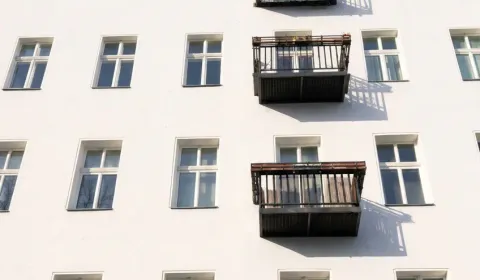
The purchase price allocation appraisal for the condominium in Hamburg raised the building share from the 62 % the income approach yields to 76 %.
Annual depreciation up by 23 %
Example: apartment building
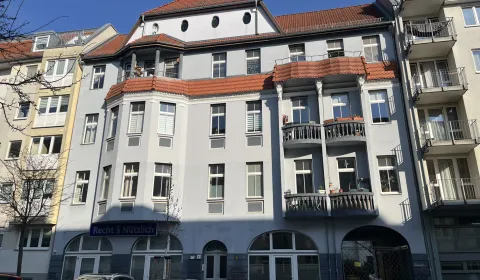
The purchase price allocation appraisal for the apartment building in Berlin raised the building share from the 67 % the income approach yields to 79 %.
Annual depreciation up by 18 %
Want concrete figures?
Gutachtenwelt’s free initial assessment calculates the tax advantages for your specific property — without obligation.
To the initial assessment
In a few steps you receive our assessment of your purchase price allocation.
Do you have questions?
Prefer to talk directly? Give us a call or send your question via WhatsApp. In a few minutes we can clarify whether an appraisal is worthwhile for your property and how the process works.
 0151 22978176